Qualifications in treework test a candidates knowledge and practical skills in a range of contexts, they are by definition a snapshot of performance. In an ideal world, knowledge and skills would be developed, consolidated and enhanced.
Whilst many of our qualifications don’t expire the value of them in confirming competence diminishes with the time elapsed since this snapshot was taken.
Ensuring workers are competent is a legal requirement, this is set out in general terms in the
- Health & Safety at Work etc Act 1974 (Section 2, 2(c))
- Provision and Use of Work Equipment regulations)1999 (reg.9)
- Management of Health & Safety at Work regulations 1999 regulation13.3.(b)
Demonstrating cometence may help contractors comply with acreditations such as the Arboricultural Associations Approved Contractor Scheme. It’s also the right thing to do – workers that know what they are doing are less likely to hurt themselves and others in the course of their work and cost less in the process through lost time, sick pay, insurance premium increases and, if things go really wrong, HSE fines or fees for intervention.
That word — competent — carries weight. It doesn't mean "was competent five years ago when you passed your assessment." Employers and contractors increasingly want to see current, dated evidence of competency, and many contracts, insurance policies, and larger clients now specify certificates that are no more than three or five years old.
Industry guidance from HSE INDG317 Chainsaws at work and FISA 805 recommends that refresher/update training takes place every three to five years and at least every 5 years respectively.
Beyond the compliance angle, skills drift. Techniques evolve, equipment changes, and without the discipline of a structured review, bad habits quietly embed themselves. A CPD unit is as much about catching those drifts as it is about ticking a box.
For anyone holding chainsaw or aerial work certificates, the question of how and when to refresh those qualifications comes up regularly. Two awarding bodies dominate this space in the UK: City & Guilds NPTC and Lantra Awards. Both offer CPD routes across the key units, but they differ in structure, format, and what they actually put you through on the day.
This article covers the main CPD units available, what each awarding body offers, and the important distinction between arriving for a skills check reassessment versus completing a refresher training course (with or without a graded outcome)
The Main Forestry & Arboricultural units
The core CPD units that most working arborists and forestry operators will encounter map onto the original qualification units:
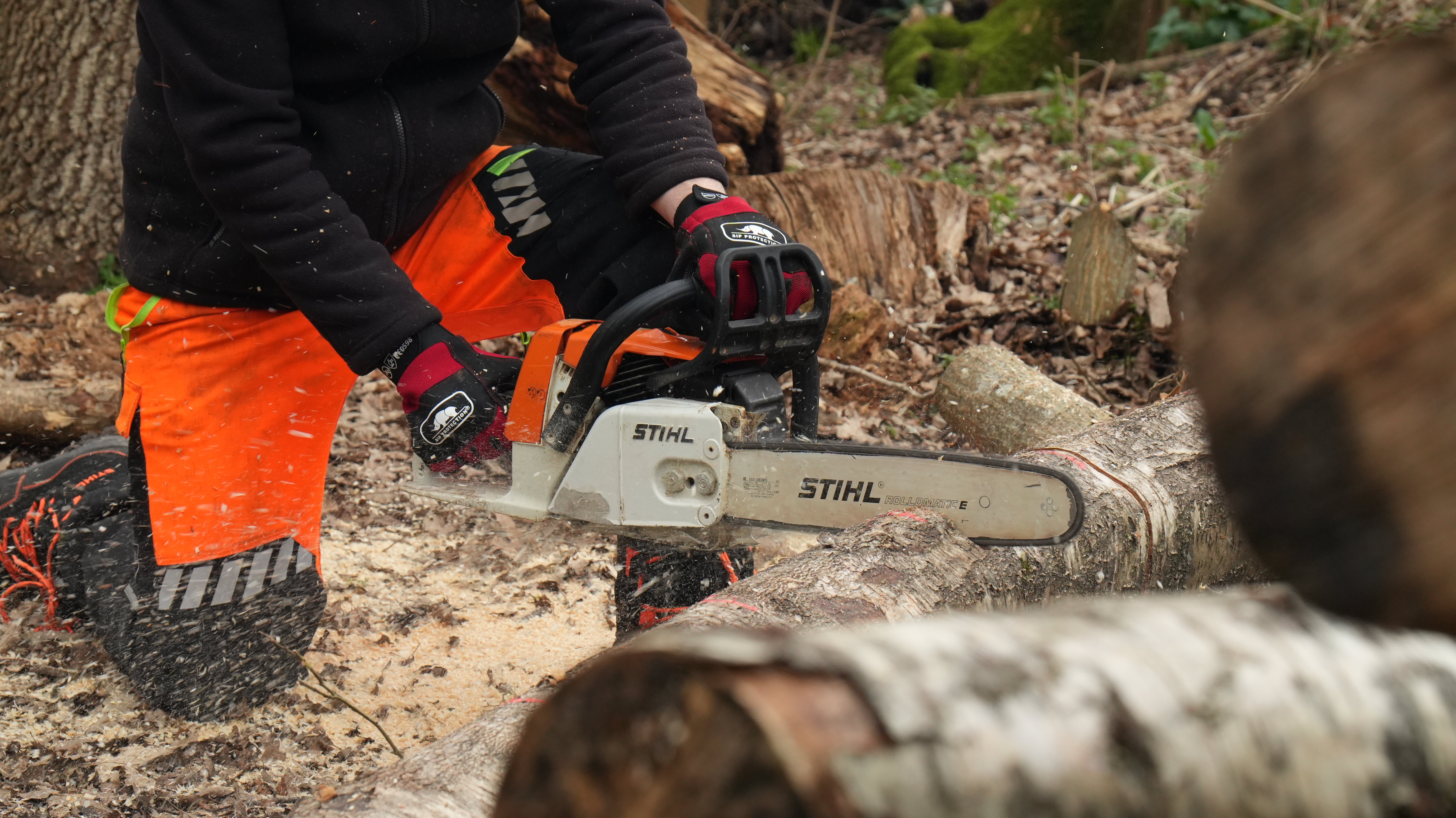
Chainsaw Maintenance and Crosscutting-0041-01 is the entry-level unit and the one with the widest spread of holders. The City & Guilds NPTC unit covers pre-use checks, maintenance procedures, chain sharpening, and crosscutting techniques. It's deceptively broad — we regularly encounter experienced operators who benefit from a fresh look at basic stances, cold starts and safety checks.
Felling Small Trees (up to 380mm) – 0041-02 is where most candidates forget the speciality cuts unless they use them regularly. Working confidently in the field has been quietly filled with shortcuts, especially in relation to hung-up tree management — the area we find most candidates revisit with fresh eyes after years in the field.
Tree Climbing and Aerial Rescue – 0041-03 covers the fundamental access and positioning skills, including the all-important rescue element. This unit is now taught with two rope systems to fully comply with the Work at Height regulations 2005, so this would be a big difference for someone assessed pre 2019. We also use a rescue dummy and empoloy a range of more modern industrial belay and work positioning devices.
Aerial Cutting – 0041-04 builds on the climbing unit and introduces the chainsaw into the canopy environment. Positioning, stability, cut choice and application, and the particular discipline required when operating a chainsaw at height all feature. This is also a unit where safer practice taught initially is often jettisoned in favour of cut and hold and extensive one handed saw operation.
Felling over 380mm covers the use of a smaller guidebar to develop felling cuts from either side of a tree. Often skills haven’t faded that much, but there’s useful input on efficient canopy breakdown and the safe incorporation of mechanical aids such as petrol capstain winches and forwarders.
City & Guilds NPTC CPD Units
Lancched in 2024, the City & Guilds NPTC offers formal CPD reassessment units that mirror the original qualification structure. They are graded 1-5 with a minimum of 3 required to pass the unit and 4 or 5 where skill levels are incrementally better than would be expected from a typical candidate. This is one of the genuinely useful features of the NPTC route. It gives both the individual and their employer something substantive: not just a pass/fail outcome but a record of where the candidate performed well and where development is still needed.
The assessment schedule is published and available via the NPTC website, so candidates can prepare with a clear understanding of what's expected. There are no surprises in terms of content — but that doesn't mean it's straightforward. The graded feedback element means the bar is explicit, and candidates working at the lower end of competent will know it.
For individuals and employers who want evidence of standards — rather than just evidence of attendance — the City & Guilds NPTC CPD reassessment is a robust choice.
Lantra Awards CPD
Lantra Awards CPD provision in arboriculture and forestry leans towards a comprehensive refresher of the core skills with a graded score for the ground based chainsaw units (between 1 and 4). The skills check result is communicated with the student and is detailed on the certificate giving everyone clarity in any next steps.
For operators who are confident in their skills and primarily need a current, valid certificate for compliance or contractual purposes, the Lantra route is efficient and well-regarded. It's also worth noting that Lantra's rerefresher units align closely with their original qualification units, so candidates who initially qualified through Lantra will find the content familiar in structure with the well regarded lantra training workbooks issued providing a handy refrence for the future.
The Lantra route also tends to suit employers running team refreshers, where the objective is to confirm the workforce is working to current standards without the administrative overhead of a fully graded reassessment for every individual.
Skills Check vs Refresher and Reassessment: Choosing the right route
This is the question we get asked most often, and the honest answer is that it depends on two things: how current the individual's practice is, and what the certificate needs to demonstrate.
A direct skills check or reassessment — turning up and sitting the unit — suits operators who have been working regularly in the relevant discipline, are confident their technique is current, and need a renewed certificate. If you've been felling trees two or three days a week throughout the preceding period, a direct reassessment is a reasonable proposition.
A refresher course is the route we'd recommend for anyone who has had a gap in practice, has moved into a supervisory or management role and is less hands-on, or who wants to use the CPD process as an opportunity for genuine skill development rather than just certification. The refresher element allows for recalibration, technique review, and the kind of honest conversation about practice that doesn't happen under assessment conditions.
We run both routes at our training centre in Kent. The combination of a refresher day with graded NPTC reassessment is popular with candidates who want the best of both: the development benefit of a training environment followed by the evidential value of a graded outcome.
---
A Practical Note on Timing
Both awarding bodies recommend that CPD reassessment takes place every three to five years. In practice, many employers and contractors now specify three years, and some sectors — particularly those with local authority or utility contractor frameworks — will specify this in contract conditions. If your certificate is approaching that threshold, it's worth planning ahead rather than waiting until a contract renewal or a new job makes it urgent.
If you're unsure which route is right for you, or which units are most relevant to your current work, get in touch. We're happy to talk it through before you commit to a booking — it's a conversation we have most weeks, and the right advice at this stage saves time and money further down the line.
Finally, its worth mentioning another way – the upskill, taking the next logical training course and unit assessment advances skills, knowledge and fault correction on previously acquired skills. The classic choice would be felling over 380mm for chainsaw operators holding the small tree felling unit.
FAQ
How often do I need to renew my chainsaw certificate?
According to FISA at least every 5 years. Older AFAG guidance 805 gave a distinction between experienced and occassional operators (3 and 5 years respectively). When skills fade or have been lost entirely. Often enough to be able to defend your descision if something goes wrong.
Is City & Guilds NPTC or Lantra better for CPD?
Lantra gives you a more structured refresher course and quality workbook as well as Approved Instructors compling with Lantra’s ongoing quality assurance.
City & Guilds give a well recognised unit re-certification, the refresher element may be highly variable as they are not specifying any refresher content – that’s up to the individual providers.
What’s the difference between a skills check and a graded reassessment?
City & Guilds use a graded reassessment which gives an assessor options to credit performance that’s better than the original minimum requirement or “met”. These grades are from 3 (the minimum to pass) to 5
A skills check in the Lantra ground based context uses a less detailed system to record the level of student performance across broad areas such as maintenance, felling etc. With Lantra the detail will be in the technical delivery.
SEO NOTES:
Title tag: City & Guilds NPTC vs Lantra Awards CPD — Chainsaw & Aerial Units Explained | Scott Fraser Training
Meta description: Comparing City & Guilds NPTC and Lantra Awards CPD units for chainsaw maintenance, tree felling, climbing and aerial cutting. Skills check, graded reassessment or refresher — which route is right for you?
URL slug: /blog/cpd-units-city-guilds-nptc-lantra-awards-arborists